

Tip SPE
- Innovative Product Series
-
Sample pretreatment
- Column Plate For Nucleic Acid Extraction
- Solid Phase Extraction Spe
- Tip SPE
- Medium Pressure Chromatography Columns High Pressure Chromatography Columns
- Affinity Chromatography Ac
- Pre Treatment Columns For Ion Chromatography
- Blank Flash Columns
- Liquid Liquid Extraction Sle
- Dispersive Solid Phase Extraction Quechers
- Serum Pipette
- Cell Culture
- Filtering Apparatus
- Laboratory filters
- Automated intelligent devices
- Maintenance Of Technics
- In vitro diagnostic reagents and consumables

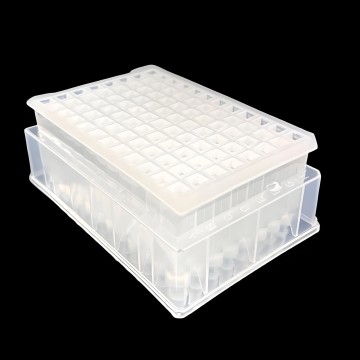
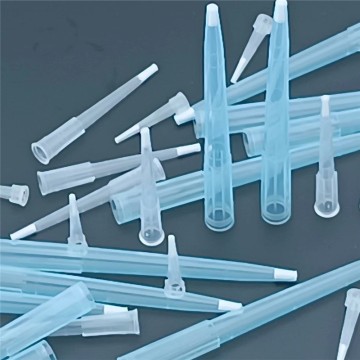
Diol Tip SPE Pipette TipsExtraction Tips
B&M® Diol is a silica gel based tip SPE with silica gel-like release properties. It extracts polar samples from non-polar solutions through polar interaction, is similar to unbound silica gel in the nature of hydrogen bond interaction with the sample, and can differentiate structurally similar compounds such as structural isomers, as well as silica gel minicolumns. It can also be used to isolate nonpolar compounds because the carbon chains in the bound phase provide sufficient nonpolar force to hold hydrophobic samples, with solvent ratio selectivity different from silica gel. Diol is commonly used to isolate drugs or metabolites, such as THC, from biological solutions, such as urine samples. It is equivalent to Agilent Bond Elut 2OH and Waters Sep-Pak Diol.
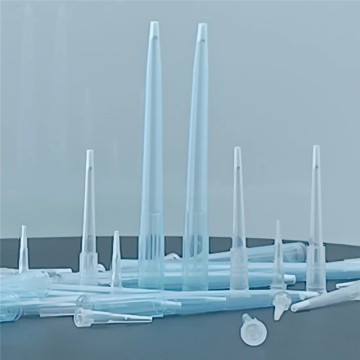
CN Tip SPE Pipette TipsExtraction Tips
B&M® CN is a silica gel-based cyanopropyl filler that can be used as a non-polar adsorbent to extract polar and non-polar molecules from aqueous solutions, as well as polar molecules from relatively non-polar solvents. In addition, cyanopropyl acts as a complex ligand to enrich some metal ions in aqueous solution.
Cyanopropyl is a weakly hydrophobic filler of the silica matrix and can be used as a direct or reverse phase adsorbent. Under the conditions of the reversed phase, nonpolar or slightly polar acidic, neutral and basic compounds are extracted from aqueous solutions. Under direct phase conditions, polar compounds are extracted from nonpolar organic solutions. In addition, cyanopropyl acts as a complex ligand to enrich some metal ions in aqueous solution. For strong hydrophobic substances that bind irreversibly at the stationary C18 phases, the stationary CN phases are a more suitable choice. Equivalent to Waters Sep-Pak CN.
C8 Tip SPE Pipette TipsExtraction Tips
B&M® C8 is a moderately hydrophobic reversed-phase silica matrix filler that is similar in adsorption to the C18 bond and holds nonpolar compounds together mainly due to the hydrophobic interactions of nonpolar carbon bonds.
Because the carbon bond of C8 is shorter than that of C18, the retention of nonpolar compounds is weaker than that of C18, which helps to elut samples with excess adsorption of nonpolar compounds.
If the use of C18 makes it difficult to eludate nonpolar objects, C8 can be used instead.